
Spitfire ace
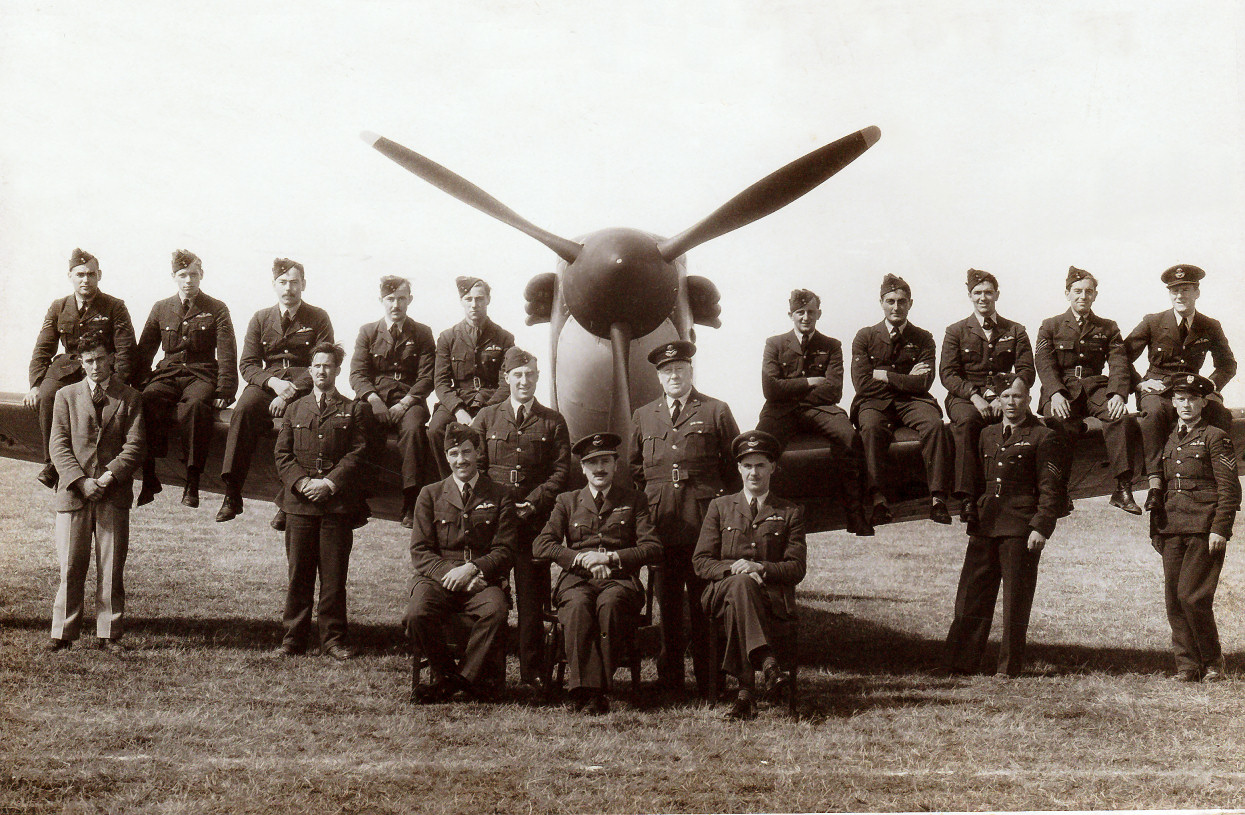
Remembering the top-scoring Australian pilot of the Battle of Britain.
He married her on a Thursday. Five weeks later he was dead. Not yet 23, and the top-scoring Australian pilot of the Battle of Britain.
He was a young man from the far side of the world. In the summer of 1940, he was flying a Spitfire with the Royal Air Force (RAF) in the skies over southern England, while the bombers came across the Channel day after day. Of all the Australians who crossed the sea to stand with Britain that summer, none scored more. And yet most people reading this will not know his name.
He came from Numeralla, a small place near Cooma in New South Wales. One of 12 children. Before he ever sat in a cockpit, he stood behind a counter at a jeweller’s shop in Sydney, a stock clerk among the rings and watches. An ordinary young man with an ordinary job. Then he joined the Air Force, trained at Point Cook, Victoria, took a short-service commission with Britain’s RAF, and sailed for England in 1937 – a boy who crossed the whole world to fight for a country that was not his own.
His name was Paterson Clarence Hughes. Everyone called him Pat.
He had a dog, an Airedale terrier, and he gave it a rank, Flying Officer Butch. The dog sometimes went up with him in the Spitfire and was said to have more flying hours than some of the pilots.
In November 1939, Pat was made a flight commander on the newly re‑formed No 234 Squadron RAF. They took on Spitfires and by the middle of August 1940, Pat was in the thick of the fighting. He became the top-scoring Australian of the battle, ranked among the top of all Fighter Command’s aces that summer, credited with about 17 victories, at least 14 of them confirmed, with shares in several more. The exact count is still argued over by those who know the records well.
He had one way of doing it. He did not fire from far off and hope. He went in close, very close, only a few aircraft lengths, to be certain of the kill. His own fitter on the ground put it simply: “no one had more air sense than Pat. His only fault was that he got too close, but that was his way.”
Early in 1940, while based in East Yorkshire, Pat met a young woman named Kathleen (Kay) Brodrick, of Hull. She said he reminded her of Errol Flynn. They married on 1 August 1940. It was a tiny wedding. No squadron friends came. The dog was very nearly the only witness. Pat once wrote, quiet about it all, that the chances of living through this were about even, and that was all a man could ask.
In his last days, the kills came fast – a triple of Bf 110s in about 15 minutes on 4 September, at least six in his final three days.
Then came 7 September 1940, the first great daylight raid on London. No 234 Squadron scrambled into a huge enemy force. Pat attacked a German bomber and pressed his attack home. He was killed in that action,12 days short of his twenty-third birthday. His commanding officer fell in the same fight.
Pat was awarded the Distinguished Flying Cross, gazetted that October, the citation noting that he had led his flight with skill and gallantry. His squadron leader had put him forward for it only about a week before both men were killed. Kay received it on Pat’s behalf at Buckingham Palace in 1942. His medals survive – lost once during an Anzac Day parade in the 1960s, then found again – and are now held at the Australian War Memorial in Canberra.
Few people in Britain today know Pat’s name. The top-scoring Australian of the Battle of Britain, overshadowed by the famous and the loud. But he is not unremembered. He is on the Battle of Britain Roll of Honour in Westminster Abbey, London, and honoured at the Australian War Memorial. He rests in a quiet churchyard at Sutton-on-Hull, near his wife’s home, where she was later laid beside him.
A jeweller’s stock clerk from a small NSW town, married five weeks, dead before his twenty-third birthday – and his name is written in Westminster Abbey and honoured at the Australian War Memorial in Canberra, half a world apart. He fought and died in a country he was not born in, in an air force that was not his.